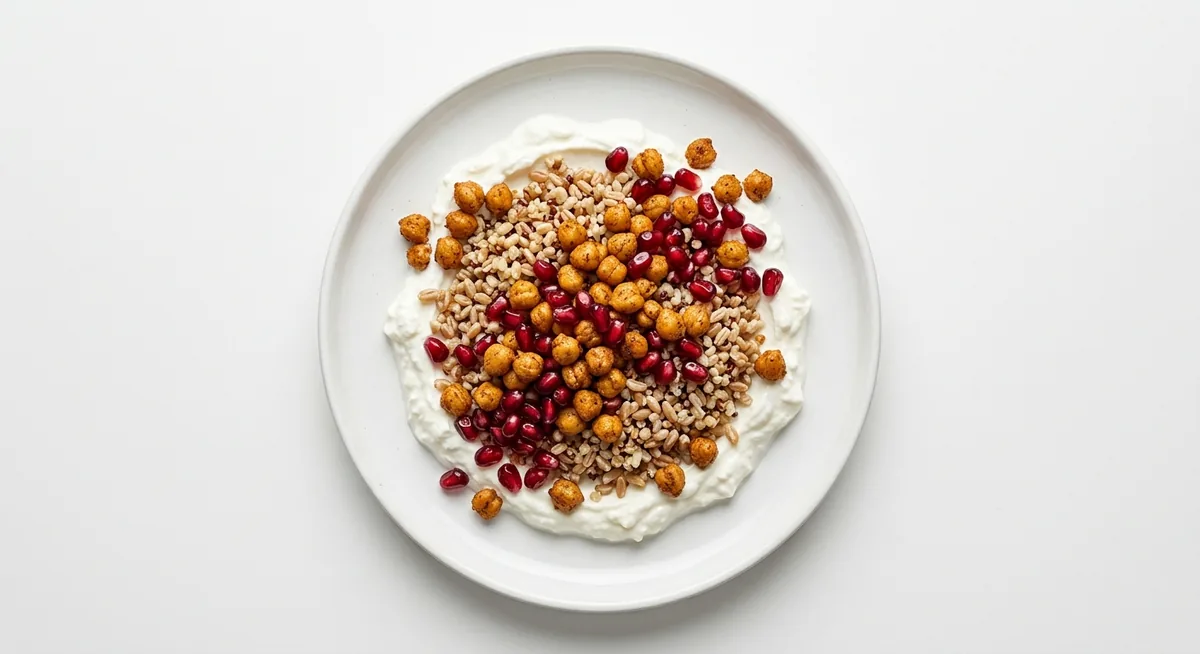
This Greek yogurt grain bowl with roasted chickpeas and pomegranate is the meal-prep recipe I return to every single week — a bowl so complete in its architecture of flavour, texture, and nutrition that it has quietly become the anchor of my entire batch-cooking practice. Warm farro and quinoa form a nutty, chewy base; a silken layer of lemony Greek yogurt dressing pools into every grain; shatteringly crispy roasted chickpeas land on top like golden jewels; and jewel-bright pomegranate arils burst with tart sweetness against the savoury spice. This Greek yogurt grain bowl is, in the truest sense, a study in contrast — hot and cool, creamy and crunchy, earthy and bright — all in a single wide, shallow bowl.
What makes this Greek yogurt grain bowl exceptional for high-protein meal prep is the synergy of its components. Greek yogurt delivers approximately 17 g of protein per 100 g, while farro and quinoa together supply all nine essential amino acids — a complete protein profile rarely achieved in a plant-forward bowl. The roasted chickpeas add a further hit of plant protein alongside resistant starch, which feeds gut microbiota and sustains energy across the morning. I have calibrated every element — the spice ratio on the chickpeas, the acid balance in the yogurt dressing, the ratio of grain to garnish — so that each component amplifies the others rather than competing for attention.
The make-ahead logic here is deliberate: the grain base and roasted chickpeas store separately in the refrigerator for up to four days, meaning assembly takes under three minutes on any given morning. The yogurt dressing keeps covered in a jar for five days. Only the fresh garnishes — pomegranate, mint, dill — need to be added at serving. This Greek yogurt grain bowl is not a recipe you make once; it is a system you install into your week, and once you do, the question of what to eat for breakfast quietly answers itself.
Ingredients
Tap an ingredient to mark it off as you go.
For the Roasted Chickpeas:
- 400 g canned chickpeas, drained and patted dry
- 30 ml extra-virgin olive oil
- 2 g fine sea salt
- 1 g black pepper
- 1 g smoked paprika
- 0.5 g cayenne pepper
- 1 g ground cumin
For the Grain Base:
- 200 g cooked farro (or 80 g raw farro, cooked)
- 200 g cooked quinoa (or 75 g raw quinoa, cooked)
- 15 ml extra-virgin olive oil
- 3 g fine sea salt
- 2 g black pepper
For the Greek Yogurt Layer:
- 300 g plain full-fat Greek yogurt (0% added sugar)
- 5 ml raw honey
- 2 g fine sea salt
- 1 g black pepper
- 5 ml fresh lemon juice
For Assembly & Garnish:
- 80 g pomegranate arils (fresh)
- 40 g raw almonds, roughly chopped
- 25 g fresh mint leaves, hand-torn
- 15 g fresh dill fronds
- 10 g crumbled feta cheese (optional, adds 1 g protein per serving)
- 2 g sumac (optional, adds brightness)
- 5 ml finishing extra-virgin olive oil (drizzle)
Instructions
-
1
Prepare & Roast the Chickpeas
Preheat your oven to 200°C (400°F). Pat the drained chickpeas thoroughly dry with a clean kitchen towel — this is crucial, as any surface moisture will steam rather than crisp during roasting. In a medium bowl, toss the chickpeas with 30 ml olive oil, salt, black pepper, smoked paprika, cayenne, and cumin until every legume is evenly coated. The spices will adhere to the oil, creating a flavourful crust. Spread them in a single layer on a rimmed baking sheet and roast for 25–30 minutes, stirring halfway through at the 15-minute mark. You’re aiming for a deep golden-brown exterior that shatters slightly when bitten — the chickpea will shrink slightly and develop a thin, crispy shell while the interior remains tender. This transformation happens because the heat drives off remaining moisture and causes the outer starches to undergo the Maillard reaction, creating savoury depth.
-
2
Prepare the Grain Base
While the chickpeas roast, gently warm the cooked farro and quinoa together in a wide, shallow saucepan over low heat with 15 ml olive oil, salt, and pepper. Stir occasionally with a wooden spoon, allowing the grains to absorb the oil and warm through for 3–4 minutes. This step prevents the grains from tasting cold and dense when assembled; the oil coats each grain and carries the seasoning evenly. The grains should feel warm to the touch and smell nutty and alive — not hot, but inviting.
-
3
Make the Yogurt Dressing
In a separate small bowl, whisk together the Greek yogurt, honey, salt, black pepper, and fresh lemon juice until smooth and pourable. The acid from the lemon juice cuts the richness of the yogurt and brightens the entire bowl; the honey adds subtle sweetness that balances the savoury spices. Taste and adjust salt if needed — the yogurt should taste clean, slightly tangy, and just barely sweet. Set aside.
-
4
Build the Bowl (Single Serving Method)
For each bowl, spoon approximately 150 g of the warm grain mixture into the base of a wide, shallow bowl. Create a gentle well in the centre and pour 75 ml of the yogurt dressing over the grains, allowing it to pool slightly. The warm grains will soften the yogurt slightly, creating a creamy, cohesive base.
-
5
Add the Roasted Chickpeas
Once the chickpeas have cooled for 2–3 minutes (they will continue to crisp as they cool), scatter approximately 100 g of them over the yogurt and grains. The contrast of the hot, crispy legumes against the cool, creamy yogurt creates a textural interplay that keeps each spoonful interesting.
-
6
Garnish with Pomegranate, Nuts & Herbs
Top each bowl with 20 g of pomegranate arils, 10 g of chopped almonds, a generous handful of torn fresh mint, and a small pinch of fresh dill fronds. The pomegranate provides bursts of tart sweetness and a jewel-like visual contrast; the almonds add subtle earthiness and crunch; the herbs introduce brightness and a whisper of anise-like complexity from the dill.
-
7
Final Touches
Sprinkle with crumbled feta (if using) and a light dusting of sumac. Drizzle 5 ml of finishing-quality extra-virgin olive oil over the entire bowl in a thin spiral — this final oil enriches the bite and adds a fruity, grassy note that ties all elements together. Serve immediately while the chickpeas retain their crispness.
Estimated Nutrition (per serving)
A note from the Editor: For meal prep, store the roasted chickpeas in an open container at room temperature for up to two days — sealing them traps residual steam and destroys the crisp shell. The grain base and yogurt dressing keep refrigerated for four to five days in separate airtight containers. Assemble each bowl fresh at serving time, adding pomegranate, herbs, and nuts only at the last moment to preserve their texture and colour. If reheating the grain base, add a splash of water and warm gently over low heat to prevent the farro from drying out.
Greek yogurt’s high protein density (approximately 17 g per 100 g) is the result of straining whey — the liquid fraction — from regular yogurt, concentrating casein proteins that digest slowly and sustain satiety for three to four hours post-meal.
Leave a Reply